
Pular para o conteúdo
Português (Brasil)
РусскийEnglishEspañolPortuguês (Brasil)DeutschFrançaisItalianoPolskiTürkçeالعربيةفارسیاردوहिन्दीবাংলাBahasa IndonesiaTiếng Việtไทย简体中文日本語한국어УкраїнськаNederlands

Hiro/editorial

Internet grátis.
Sem palavras complicadas.

Analisamos bloqueios, alterações de rede e configurações práticas que ajudam a manter o acesso e a privacidade.

Artigo

New VPN service developed by former censorship regulator

Former Roskomnadzor employee Vladislav Minakov participated in the development of the AIVPN service designed to bypass internet restrictions. For about seven years, he worked at the Main Radio Frequency Center, which was responsible for operating threat countermeasure systems and enforcing access blocks. As part of his previous duties, he supervised the "Revizor" system that monitors telecom operators.

Leia →

Artigo

Restrictions on Foreign Traffic and Network Filtering in Russia

Russia is discussing potential restrictions on the volume of foreign internet traffic for domestic users. As part of telecom sector reforms, the Ministry of Digital Development is considering mechanisms to monitor and filter network data originating from foreign domains.

Leia →
Artigo

VPN usage is now factored into pre-trial detention decisions

Russian law enforcement authorities have begun viewing the use of anonymization tools, traffic encryption, and self-deleting messages as evidence of an attempt to evade investigation when determining pre-trial restrictions. Investigators interpret such technologies as secrecy measures, using them as an additional argument to place suspects in custody.

Leia →
Artigo

VPN client INCY removed from Russian App Store

The INCY application is no longer available for download from the Russian segment of the App Store, although it remains accessible in store catalogs of other countries. According to the development team, service mechanisms are being adapted, and users are advised to temporarily change their Apple account region.

Leia →
Artigo

Claude Starts Blocking Users with Russian Passports

Anthropic, the creator of the Claude neural network, has introduced mandatory identity verification whenever suspicious activity, such as using tools to bypass restrictions, is detected. If a user provides a Russian passport during this check, their account is immediately blocked. Furthermore, subscription fees paid prior to the ban are not refunded.

Leia →
Artigo

Mobile Internet Speed Restrictions Announced in Moscow for Three Days Due to Summits

From October 27 to 29, mobile internet speed reductions are planned in Moscow within the Third Transport Ring area. Restrictions will take effect from 11:30 on the first two days and from 9:30 on the third day. During the slowdown, users will only have access to whitelisted resources, while voice calls, home internet, and Wi-Fi will continue operating as normal.

Leia →
Artigo

Internet shutdown in Khyber district enters its second week

Internet access in the Bara area of Khyber district has been suspended for half a month. This restriction has caused multi-million losses for local trade and significantly disrupted students' learning process.

Leia →
Artigo

VPN applications face new removal wave from App Store

Apple has blocked access to another virtual network client in the Russian segment of its app store. In late October, the creators of the Incy app, which served as an alternative to other popular services, received a removal notification. The developers are working to restore its availability, while the application remains freely available in all other countries.

Leia →
Artigo

New Requirements for Storing Apple and Microsoft User Data in Russia

Corporations Apple and Microsoft have been added to the register of information dissemination organizers. They are now subject to obligations regarding the storage of Russian user data within Russia. According to regulatory decisions numbered 593-RR and 594-RR, the companies must ensure data preservation, although the exact process of their inclusion in the list remains undisclosed.

Leia →
Artigo

VPN technology in Russia facing AI-driven blocking and censorship

Russian authorities are working on initiatives to automatically identify and restrict traffic obfuscation services using artificial intelligence. The goal is to analyze parameters of approximately 70% of target systems, aiming for a blocking efficiency of up to 95%. Simultaneously, the capacity of the traffic filtering infrastructure is planned to expand 2.5 times to 954 Tbps by 2030.

Leia →
Artigo

Reasons and Consequences of the Internet Shutdown During the July Events

The internet shutdown during the events of July 2024 was a deliberate measure designed to conceal the extent of violence and casualties among protesters. The widespread communication blackout aimed to prevent information about victims from reaching audiences both locally and internationally, while also disrupting coordination among demonstrators and slowing down the movement.

Leia →
Artigo

Bypassing internet blockades will become more difficult and costly

Over the next three years, almost 60 billion rubles have been allocated in the 2027-2029 draft budget for internet blocking. This significantly exceeds figures from two years ago, when 32 billion rubles were planned for the same period. Funding will come from increased traffic fines for drivers and mandatory contributions from telecom operators and advertisers. Official project targets set the average VPN blocking efficiency at 92%.

Leia →
Artigo

VPN blocks and the VLESS protocol vulnerability analysis

In September 2026, users in various regions of Russia experienced large-scale disruptions in VPN services. The restrictions affected many popular censorship-bypass tools, including those using the VLESS protocol. This intensification of control coincided with the end of the autumn elections, after which more than ten major services were blocked. Meanwhile, the regulator traditionally refrains from making official comments on the situation.

Leia →
Artigo

New VPN blocks started after the State Duma elections

After the parliamentary elections in Russia, a sharp increase in problems with accessing bypass tools was recorded. Over the past seven days, reports of new restrictions have been received from at least ten specialized providers.

Leia →
Artigo

Massive VPN restrictions in Russia intensify following parliamentary elections

Russia has seen a sharp increase in restrictions on censorship circumvention tools following the completion of the State Duma elections. Around ten specialized projects reported large-scale technical difficulties over the past week. Users across the country have begun complaining en masse about the inability to establish a secure connection via both mobile internet and home Wi-Fi.

Leia →
Artigo

How VPN restrictions will affect Russian internet traffic

Restrictions on VPN services will not lead to a decrease in internet traffic in Russia. This opinion was expressed by Alexey Volin, General Director of the Space Communications enterprise, at an industry conference in Nizhny Novgorod. According to him, blocking individual resources only forces users to switch to alternative platforms, which ultimately stimulates traffic growth.

Leia →
Artigo

Roskomnadzor Prosecutes Journalists Who Criticize It

Roskomnadzor is actively prosecuting media outlets and Telegram channels that question its technical capabilities or the correct operation of its systems. The agency initiates lawsuits and fines for publications concerning equipment failures, blockages of popular services, and other controversial initiatives.

Leia →
Artigo

VPN poses challenges for Spartak defender Christopher Wu

Cameroonian central defender of Moscow Spartak Christopher Wu shared his impressions of living in Russia. According to the football player, besides the harsh climate, the unstable operation of services for bypassing internet blocks has become one of his main domestic difficulties. The athlete noted that he spends a lot of time at home, but due to constant connection interruptions, it can be hard for him to watch a movie or a football match broadcast.

Leia →
Artigo

Anti-VPN measures may lead to new charges for 5G traffic

The Russian government is considering introducing an additional fee for international traffic in the recently launched 5G networks. This initiative is aimed at restricting the use of censorship circumvention tools. It is expected that subscribers will have to pay extra if their international traffic exceeds 50 gigabytes per month.

Leia →
Artigo

Foreign internet traffic fees may be introduced in Russia after parliamentary elections

Following the parliamentary elections, the Russian government has resumed discussions on introducing additional fees for international internet traffic. At this stage, authorities are considering charging users for exceeding a fifty-gigabyte limit on newly launched fifth-generation networks. These changes are planned for early October of this year, with the primary objective being to restrict the operation of independent tools used to bypass blockings.

Leia →
Artigo

Expert forecasts on the future of internet development in Russia

German Klimenko, head of the board of the Digital Economy Development Fund, shared his expectations regarding the future of the Russian internet sector after the completion of the special military operation. He expressed the opinion that the introduction of strict restrictions, such as systems of approved websites, would not be required on a permanent basis. According to the specialist, most of the current strict security measures are applied temporarily and will cease to operate when the external situation changes.

Leia →
Artigo

VPN for Google Gemini in Russia: how to restore access

In late summer and early autumn of 2026, Russian users encountered difficulties when trying to use Google Gemini. Common bypass methods stopped working for many of them: although the interface may load and display chat history, attempting to send a new query results in an error stating that the service is unavailable in the region. The issue has become widespread, with complaints spiking in August and September, especially after September 23.

Leia →
Artigo

Reddit's Growing Popularity in Vietnam Amid Internet Censorship

Amid strict restrictions on freedom of speech in Vietnam, anonymous online platforms are becoming an important space for open discussions of sensitive topics. A prominent example is Reddit, where users can freely exchange opinions without fear of government prosecution. Vietnamese internet service providers attempt to restrict access to this resource, but this does not stop citizens.

Leia →
Artigo

Using VPN in Russia proves difficult for Spartak defender Christopher Wooh

Cameroonian central defender of the Moscow football club Spartak, Christopher Wooh, shared the difficulties he regularly faces due to internet restrictions in Russia. According to the 25-year-old athlete, the unstable operation of bypass tools interferes with his leisure time at home, as constant connection failures make it hard to watch movies and sports broadcasts.

Leia →
Artigo

VPN blocking hits Russian regions on September 22

On September 22, internet disruptions were reported in several regions of the Russian Federation. Difficulties with data transmission affected residents of St. Petersburg, Tatarstan, and Yakutia, as well as the Sverdlovsk, Novosibirsk, Chelyabinsk, Nizhny Novgorod, Rostov, and Yaroslavl regions. Additionally, similar connection issues were observed in the Stavropol and Krasnodar territories.

Leia →
Artigo

Economic Crisis and Internet Shutdown in Kashmir Raise Serious Concerns Among Locals

In the city of Muzaffarabad and other areas of Pakistan-administered Jammu and Kashmir, the socio-economic crisis is worsening. Local residents, businesses, and students are struggling with the consequences of rising fuel prices, a decline in tourism, and prolonged connectivity outages.

Leia →
Artigo

VPN helps Russian users access the App Store during outages

Russian users have encountered significant difficulties accessing the App Store. For many of them, the platform stopped opening directly, resuming operation only after activating a virtual private network.

Leia →
Artigo

VPN is required to access App Store in Russia

Russian users are experiencing widespread disruptions when accessing the App Store. The marketplace either loads extremely slowly or fails to open entirely without using additional tools to bypass restrictions.

Leia →
Artigo

Residents of Pakistan-administered Kashmir face over one hundred days of internet shutdown

Severe restrictions on internet access have been in place for more than a hundred days in the Pakistan-administered region of Kashmir. The suspension of mobile data and broadband services has disrupted businesses, educational institutions, and daily life for local residents.

Leia →
Artigo

Internet Shutdown in Pakistan Violates Human Rights

Since early June 2026, Pakistan-controlled Kashmir has experienced severe restrictions on internet services. Local authorities imposed an indefinite and blanket shutdown of network access amid protests demanding electoral reforms and socio-political rights. Experts point out that such actions violate fundamental human rights, including the right to peaceful assembly guaranteed by international covenants.

Leia →
Artigo

VPN checks initiated via electronic voting system in Moscow

An activity aimed at detecting circumvention tools among users has been recorded on the remote electronic voting platform in the capital. According to a technical analysis, the voting website requests the loading of an image from a popular video hosting platform that is restricted in the country. The response of the system shows whether the resource is accessible, and these details are sent to the server prior to authorization.

Leia →
Artigo

Internet restrictions lifted for foreign guests at youth forum in Yekaterinburg

During the International Youth Festival held in Yekaterinburg from September 11 to 17, foreign participants were granted unrestricted access to the internet. All websites and social networks usually blocked in the Russian Federation opened on their mobile devices without the need to use any tools for bypassing restrictions.

Leia →
Artigo

Australia Prepares New Laws to Increase Internet Censorship

The Australian government has introduced a new bill aimed at tightening control over the digital space. Previous attempts to impose similar restrictions in 2024 and 2026 faced public backlash, forcing the government to temporarily back down or soften the wording. However, the new initiative demonstrates a more sophisticated approach to regulating free speech under the guise of user safety.

Leia →
Artigo

Internet Shutdown in Kashmir: Digital Blockade and Lack of Legal Guarantees

Since June 5, 2026, extensive restrictions on internet services have been documented in Pakistan-administered Kashmir. These measures were implemented amidst mass protests by local residents demanding electoral reforms and better socio-political conditions. During clashes with the army and police, over forty people were killed, and hundreds of citizens were injured. This region is internationally recognized as a disputed territory, whose status, according to UN Security Council resolutions, must be determined through a free vote.

Leia →
Artigo

Massive VPN disruptions hit Russia due to tightened provider controls

Large-scale internet connection failures have been recorded across Russia, affecting numerous regions. The highest volume of complaints originated from residents of Moscow, the Moscow region, and the Republic of Karelia, with each of these regions accounting for 8% of the total reports. Yaroslavl region registered 6% of the complaints, Tyumen region accounted for 5%, and disruptions were also noted by users in Saint Petersburg, the Leningrad region, and Primorsky Krai.

Leia →
Artigo

AI coding assistant Cursor restricts access for users in Russia

The popular code editor with built-in artificial intelligence, Cursor, has stopped functioning in the Russian Federation. When attempting to send a request from Russian IP addresses, users encounter system errors, whereas the service continues to operate normally when using foreign network settings.

Leia →
Artigo

VPN bypass capability and future messenger restrictions after elections

Ahead of the parliamentary elections scheduled for September 18-20, discussions regarding potential restrictions on popular communication platforms have resumed. Users express concern that after the voting concludes, access to Telegram and WhatsApp will become more difficult, and conventional tools for bypassing blocks will prove ineffective.

Leia →
Artigo

VPN and foreign IP restrictions on Russian election websites

Ahead of the September 2026 State Duma elections, which allow remote electronic voting in 33 Russian regions, users have faced severe access restrictions on government web resources. The Central Election Commission and other authorities are blocking access to their websites for anyone trying to connect from abroad or through specific networks, including virtual private networks.

Leia →
Artigo

VPN usage is banned for two months in Doda district

A complete ban on virtual private networks has been established for a duration of two months in the Doda district of Jammu and Kashmir. Local authorities justified this measure by the need to ensure cybersecurity, combat illegal activities, and preserve public order.

Leia →
Artigo

Internet shutdown risks in Kenya ahead of 2027 elections: economic consequences

In a report from September 2026, analysts warn that Kenya could face internet shutdowns and media restrictions during the 2027 general elections. These measures threaten not only democratic processes but also the nation's economy, which is almost entirely dependent on digital networks.

Leia →
Artigo

Why VPN blockages in Iran were deemed pointless for state bodies

Iranian authorities have decided to lift the ban on the use of foreign social networks and messengers for government agencies. Now, officials can officially use these platforms to publish information, although access restrictions to foreign resources remain in place for ordinary citizens.

Leia →
Artigo

Albanese Government accused of internet censorship

In Australia, the current administration led by Anthony Albanese has faced serious allegations. The government is accused of promoting initiatives that could lead to digital censorship and restrict citizens' freedoms online.

Leia →
Artigo

VPN services in Russia face threats from new blocks

Access restrictions lead to a significant increase in the operational costs of bypass services. Each wave of blocks forces developers to purchase new IP addresses, reconfigure servers, and update client settings. New network resources can be blocked within hours, rendering constant address changes ineffective.

Leia →
Artigo

ChatGPT Blocked in Russia Amid New User Restrictions

The popular chatbot ChatGPT has stopped opening in Russia at the network level. Now, when attempting to access the website without using a foreign IP address, the connection is immediately terminated, displaying a connection error. Previously, access restrictions came from the developer OpenAI itself, but the current situation points to blocking by Russian internet service providers.

Leia →
Artigo

First consecrated VPN launched in Russia

At the IT-2026 international conference, Vasily Glushkov, head of the Holy Synod's IT department, presented a new service called Holy Tunnel, developed by the Russian Orthodox Church. The creators note that only Orthodox specialists worked on the project, and the finished product was consecrated by senior church hierarchs, making its use completely safe and approved by the church.

Leia →
Artigo

New notification system in Russia warns of internet shutdowns and security threats

An independent system for notifying citizens of emergencies, security threats, law enforcement actions, and network outages has begun operating in Russia. The project was created due to regular delays in the operation of official emergency services, whose warnings often arrive late. Currently, the number of users of this specialized automated chatbot has exceeded 13,000 people.

Leia →
Artigo

A new type of proxy in Telegram and its features

The emergence of WEB Proxy does not guarantee absolute security for Telegram, but it significantly complicates its blocking. The new technology uses a modified data transfer mechanism that masks itself as regular web traffic, which reduces the likelihood of detection. Developers plan to test this solution once it is fully integrated into client applications.

Leia →
Artigo

Charges Against Pavel Durov in Russia and the West: What Is the Difference

In recent months, Telegram founder Pavel Durov has faced serious pressure from regulatory authorities in various countries. French law enforcement agencies have been pursuing charges against him for two years, culminating in his detention at Paris-Le Bourget Airport in August 2024. In July of the same year, Russian authorities placed the entrepreneur on an international wanted list and added him to their register of terrorists and extremists. Additionally, Australia joined the wave of accusations, claiming the messenger violates local online safety laws.

Leia →
Artigo

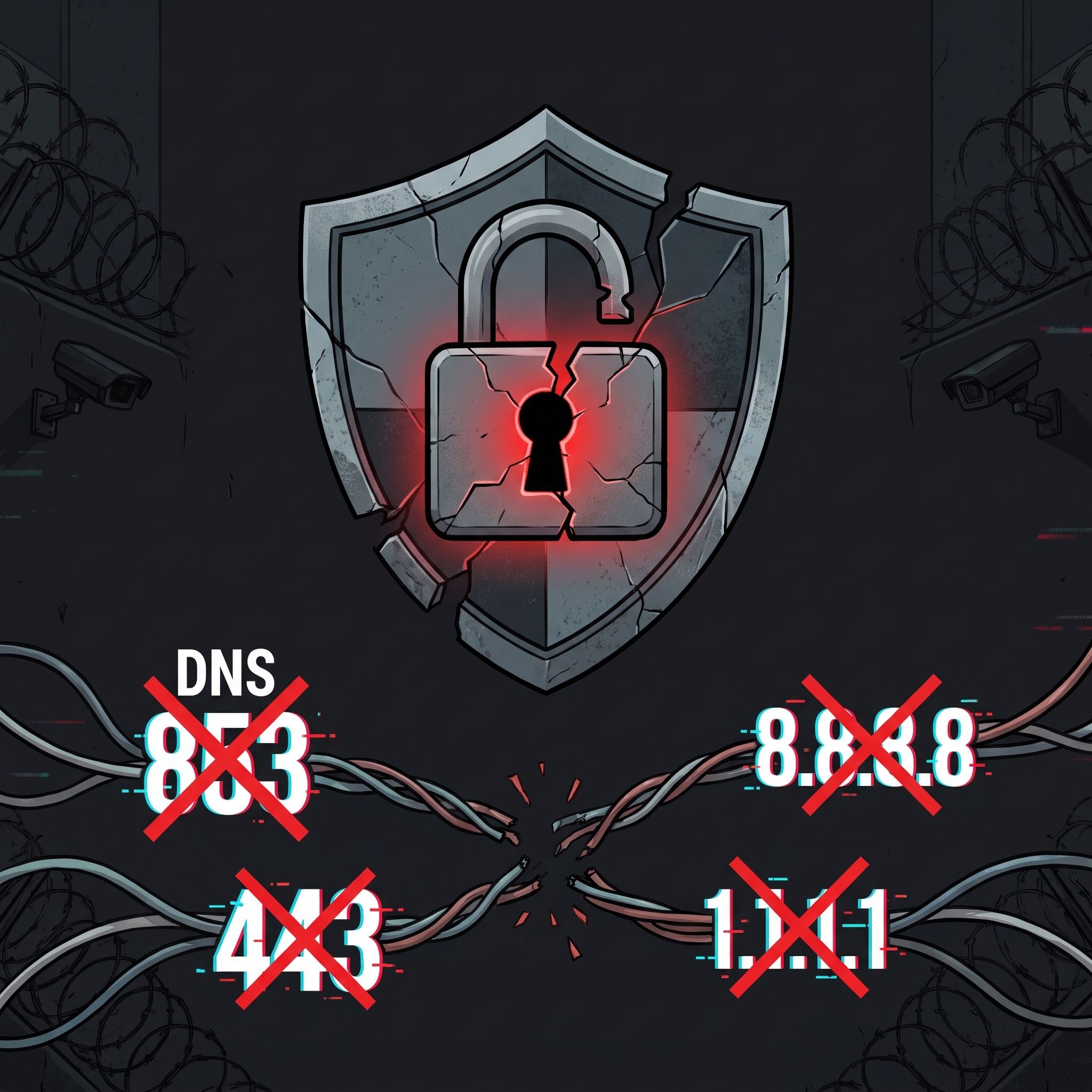
Russia Begins Blocking Encrypted DoH and DoT DNS Protocols

In late August 2026, Russian internet users experienced disruptions in the operation of encrypted DNS services from Google and Cloudflare. The issue affected subscribers of several major providers, including Rostelecom, Beeline, Dom.ru, Tattelecom, and SkyNet. Technical specialists noted that requests to the secure DoT and DoH protocols stopped receiving responses, with the nature of the failures varying depending on the technology used.

Leia →
Artigo

VPN of Michael Nacke closes amid technical issues of another service

Blogger Michael Nacke announced the cessation of key sales for his censorship circumvention service. He explained this decision by the constantly tightening blocking measures from regulatory authorities and difficulties with receiving payments from Russia, emphasizing that this project is not his primary activity.

Leia →
Artigo

New VPN blocking tactics in Russia disrupt service operations

The Russian regulator has changed its tactics for countering censorship by targeting entire subnets instead of blocking individual IP addresses. Consequently, the traditional method of restoring connectivity by quickly changing IPs has lost its effectiveness and become economically unviable for many providers.

Leia →
Artigo

VPN from the government: does an alternative exist for users

Russia is considering tighter measures against tools used to bypass online blocks. The plan involves isolating IP addresses of approved resources into separate lists to facilitate precise blocking of restricted sites. At the same time, many specialists face the necessity of using such technologies for their professional work.

Leia →
Artigo

Will VPN be fully blocked in Russia?

The Russian Ministry of Digital Development has proposed changing the rules of the internet infrastructure to restrict access to banned resources. The ministry asked hosting providers, CDN operators, and web security services to isolate IP addresses from the approved list into separate subnets. This decision is aimed at combating illegal bypass services, which currently share network resources with legitimate websites.

Leia →
Artigo

VPN services to be excluded from trusted internet lists

The Ministry of Digital Development plans to reform the trusted internet infrastructure system. The new regulations aim to prevent web resources prohibited in Russia from entering the so-called "white lists." These restrictions will affect not only illegal platforms like online casinos or websites selling banned substances, but also services used to bypass blocks.

Leia →
Artigo

Limiting constant VPN use urged by State Duma

The continuous use of specialized block-circumvention services carries security risks, which is why citizens, especially the younger generation, should be discouraged from regularly using such software. This statement was made by Sergey Boyarsky, the head of the State Duma Committee on Information Policy, Information Technologies, and Communications.

Leia →
Artigo

VPN has become a new utility for Russian residents along with electricity and water

Consumer activity in the field of using blocking circumvention services demonstrates steady growth. Between March 2025 and March 2026, the five most in-demand applications of this type were downloaded by users 35.7 million times. At the same time, the peak of popularity occurred in March, when the number of downloads exceeded 9.2 million.

Leia →
Artigo

VPN becomes necessary to access Wikipedia in Russia

On the night of August 28, Russian residents encountered widespread difficulties when trying to open the popular online encyclopedia. By morning, the number of malfunction reports exceeded several hundred, with users noting that the website only loaded when using specialized tools to bypass restrictions.

Leia →
Artigo

Russian TSPU systems begin intercepting unencrypted DNS requests to Google and Cloudflare

Starting on the evening of August 26, 2026, a new interference with network traffic was detected in Russia. Specialized TSPU equipment began intercepting unencrypted DNS requests sent to popular public servers owned by Google (8.8.8.8) and Cloudflare (1.1.1.1). Previously, secure DoH protocols from these companies had already been blocked on the same nodes.

Leia →
Artigo

VPN servers in Russia face a massive new wave of blocks

Russia has experienced a new wave of restrictions that caused a significant portion of popular bypass servers to stop functioning. Studies conducted in April 2026 also revealed serious user privacy vulnerabilities when using mobile software. Out of thirty analyzed popular applications, twenty-two are capable of detecting active secure connections on the device.

Leia →
Artigo

VPN is now required to access Wikipedia in Russia

On the night of August 28, Russian internet users faced massive difficulties when trying to open the popular online encyclopedia. Over 500 complaints regarding the website's availability were registered, with disruption reports submitted regularly every few minutes. It was revealed that the resource practically stopped opening for users in Russia who do not use tools to bypass blocks.

Leia →
Artigo

How Russia attempted to promote repressive control at the UN level

By the end of 2026, a new international document—the UN Convention on Cybercrime—is scheduled to be submitted to the State Duma for ratification. Although Russia was the original initiator of this agreement, Moscow now plans to ratify it with certain reservations, as it does not agree with all of the final provisions.

Leia →
Artigo

Why VPN users face website loading issues in Russia

Many users and developers in Russia experience sudden issues with accessing standard, legitimate websites. As of August 22, 2026, the use of circumvention tools is not officially prohibited in the country, but specific network filtering mechanisms can disrupt connection stability. Understanding the root causes of these failures helps to configure operating systems and software correctly.

Leia →
Artigo

VPN and internet services crash in Russia during major outage

Massive internet outages have been reported in Russia, with users continuing to complain about a lack of network access. The issues have also affected tools designed to bypass restrictions, which have temporarily stopped functioning as well.

Leia →
Artigo

How Internet Censorship Threatens the Operation of IoT Systems

The concept of the Internet of Things relies entirely on the free exchange of data between devices. However, global internet freedom has been steadily declining for 15 consecutive years. Out of 72 evaluated nations, conditions deteriorated in 28, while only 17 showed improvement, with China maintaining the most restrictive environment for over a decade. Website blocking and content filtering directly damage the digital infrastructure required for connected systems to function.

Leia →
Artigo

Access without VPN to Spotify and Netflix offered by Russian telecom operators

The Russian telecommunications operator MTS has launched a new service called "Global Access". This option allows users to visit popular foreign platforms directly through the operator's standard mobile application. The list of accessible resources includes such foreign services as Spotify, Ticketmaster, Strava, and Netflix.

Leia →
Artigo

How independent VPN services survived a massive state attack

In early August, Russia faced one of the most massive waves of blocking aimed at restriction-bypass services. According to politician Leonid Volkov, this confrontation became the largest in history. Representatives of prominent projects, including Liberty VPN, Amnezia VPN, Paper VPN, and BlancVPN, shared their views on the situation and detailed the unique features of this attack.

Leia →
Artigo

How internet blocks are bypassed in Russia and who helps

Recently, government regulators in Russia have significantly strengthened internet censorship, restricting access not only to specific websites but also to tools designed to bypass these restrictions. Against this backdrop, a gray market of services has emerged, with participants helping users restore access to online resources. Some do this for free out of solidarity, others earn money by configuring equipment, and some exploit the situation to scam people.

Leia →
Artigo

VPN on App Store: Will Apple Delete Incompatible Applications?

Recently, rumors have actively spread online that Apple plans to remove applications from its App Store if they fail to function when a VPN is enabled. This has caused particular concern among users in Russia, where the availability of such services is constantly changing. However, a detailed analysis of the platform rules reveals a completely different picture.

Leia →
Artigo

VPN applications are used by scammers to hack phones

Cybercriminals have actively started distributing malicious software disguised as bypass tools. Under the guise of standard utilities, users receive dangerous files that grant attackers complete remote access to their mobile devices once installed.

Leia →
Artigo

Using a VPN to listen to banned music leads to court in Kurgan

In Kurgan, law enforcement officers detained a 19-year-old local resident. The young man searched the internet for a music track classified as extremist and listened to it using a service designed to bypass online restrictions. The detention occurred on August 13, and the administrative offense report was announced the following day.

Leia →
Artigo

VPN fails to help some Russians access Google Gemini

Google's Gemini neural network has stopped working for some users in Russia, despite their use of bypass tools. Although geographic restrictions were already in place, the system now occasionally fails even when changing virtual locations.

Leia →
Artigo

VPN and alternative methods of bypassing internet restrictions

Recent technical disruptions in popular censorship circumvention tools have led to a temporary loss of access for many users. This has affected the most loyal audience, and fixing the resulting issues requires significant time from developers.

Leia →
Artigo

Browsing without VPN amazed a Moscow tourist in Almaty

A visitor from Moscow shared her impressions on her third day in Almaty. In addition to the excellent weather, she was highly impressed by the quality of the local mobile connection.

Leia →
Artigo

Fake sites bypassing VPN steal users' personal data

A new fraudulent scheme aimed at stealing user data has appeared on the internet. Cybercriminals are creating fake websites that offer downloads of popular games and applications that are officially unavailable in Russia, claiming that no block-circumvention tools are needed.

Leia →
Artigo

How Independent Investigations Help Bypass Censorship and Reveal Attack Consequences

In the second quarter of the year, media attention was focused on the increasing air strikes on Russian territory, including an incident with environmental consequences in the Tuapse area. Official entities attempted to conceal the scale of these events, but independent researchers bypassed restrictions using open-source intelligence. At the same time, citations of foreign media decreased due to a shift in international political focus to other regions, including the Middle East.

Leia →
Artigo

Bangladesh authorities deliberately shut down internet during July 2024 protests

During the trial concerning crimes against humanity, details of the deliberate communication blackout during mass unrest in Bangladesh were disclosed. Awami League General Secretary Obaidul Quader coordinated the crackdown on protests and ordered direct internet restrictions. Recorded telephone conversations confirm the existence of a clear chain of command in these decisions.

Leia →
Artigo

VPN restrictions complicate the work of developers in Russia

Restrictions on virtual private networks in Russia have created serious obstacles for software development professionals. The primary tools affected are those critical for international collaboration and open-source projects. These include cloud-integrated development environments, libraries, version control systems, and code repositories.

Leia →
Artigo

How VPN and Steam will shape the Russian internet soon

A new draft law introduced to the state parliament in December 2024 aims to establish previously missing definitions within Russian legislation. The document proposes to legally define terms such as video game, gaming platform, and video game distributor. This initiative is designed to simplify the systematic planning and implementation of state support measures for the domestic gaming industry.

Leia →
Artigo

VPN downloads in Russia increase 14-fold

In March 2026, Russia saw a sharp surge in demand for tools to bypass online restrictions, with downloads increasing 14-fold. Users downloaded such applications 9.2 million times from Google Play alone, while the total number of installations for the entire first quarter exceeded 21 million.

Leia →
Artigo

VPN under state standards proposed by Roskomnadzor for IT companies

The Russian regulatory agency held a meeting with IT industry representatives following numerous complaints from software developers. Due to systematic restrictions on the operation of bypass services, domestic developers lost reliable access to foreign code repositories, libraries, and cloud platforms. Earlier, representatives of a professional association had already called for a more cautious approach, as current restrictions virtually halt the software development process.

Leia →
Artigo

VPN blocking and new restriction waves

Restricting VPN services requires significant financial resources and technical efforts from regulatory bodies. TelecomDaily head Denis Kuskov notes that this process will be long and complex due to a constant technological standoff: users find new bypass methods, while the regulator implements more advanced countermeasure algorithms.

Leia →
Artigo

Mobile Internet Restrictions in Russia and the Use of Whitelists

Ahead of the September elections and amidst attacks on warehouses and oil refineries, Russian authorities continue to tighten internet access rules. This is reflected in the regular blocking of censorship-circumvention tools and the transition of mobile internet to a system of approved whitelists.

Leia →
Artigo

Kashmir leads in the number of internet shutdowns

Studies show that nearly half of all internet shutdowns in India occur in the disputed state of Jammu and Kashmir. Local authorities regularly restrict communication during unrest and curfews. This region, along with the states of Gujarat, Rajasthan, and Haryana, accounts for over 75% of all recorded blackouts in the country between 2012 and 2017, with Jammu and Kashmir alone accounting for about 47%.

Leia →
Artigo

Does VPN heat up your smartphone: expert opinions

Many users notice that when a VPN is turned on, their mobile devices start to heat up significantly, which is noticeable even on powerful models. Experts explain this phenomenon by the increased load on the processor during traffic encryption, and also warn of safety risks associated with the use of some free services.

Leia →
Artigo

New VPN blocks by Roskomnadzor disrupt services in Russia

The Russian regulator Roskomnadzor has implemented large-scale restrictions affecting the network addresses of more than 20 prominent hosting providers. As a result of these actions, users of popular censorship circumvention tools, including Amnezia and Paper VPN, experienced severe connection issues.

Leia →
Artigo

Messengers without VPN in Russia: what works in 2026

In August 2026, the digital environment in Russia has changed significantly, forcing users to face the instability of communication tools daily. Many familiar platforms now require special tools to bypass restrictions, and some have completely ceased to function.

Leia →
Artigo

Control over legitimate VPNs will be tightened to prevent blocking circumvention

The Russian Ministry of Digital Development plans to work with hosting providers to tighten the monitoring of IP addresses belonging to approved VPN services. These addresses are part of a special exclusion list managed by the monitoring center. A continuous tracking system is proposed to detect servers masquerading as approved platforms to bypass network restrictions.

Leia →
Artigo

VPN removal by Apple and Google: analysis and developer tips

In Russia, the mass removal of VPN applications from official stores, initiated by the state regulator, continues. Between 2022 and 2025, the number of blocked programs in the App Store grew hundreds of times over: while in 2022 only 7 services fell under restrictions, in 2025 this number reached 1213. One prominent example was the Happ client, which was first removed in June 2026, but returned to the store under a modified name just a few days later.

Leia →
Artigo

How VPN technology survives massive censorship attacks

At the beginning of summer, one of the most popular tools for bypassing internet restrictions faced unprecedented pressure. For a month and a half, attacks targeted not only the servers but also the supporting infrastructure, including payment systems and employee emails. According to the project's creators, preparation for this operation by regulatory authorities had been underway for about a year. One of the project's leading technical specialists shared details of this ongoing confrontation.

Leia →
Artigo

Reasons for BiP and KakaoTalk messenger outages in Russia

Russian users have encountered significant difficulties while using the Turkish messenger BiP and the South Korean KakaoTalk. Sending messages, uploading files, and accessing personal accounts are now mostly possible only with an active VPN. At the same time, these platforms have not been officially added to the register of banned resources.

Leia →
Artigo

Using VPN and AI could become an aggravating factor in crimes

Alexander Bastrykin, Chairman of the Investigative Committee of Russia, has proposed stricter punishments for offenses committed using modern digital technologies. This initiative concerns the use of artificial intelligence, VPN services, proxy servers, and similar technical tools.

Leia →
Artigo

How a Banned Chat App Defeats India's Internet Blackout and What It Means for the CLARITY Act

In India, a youth-led political movement recently forced the resignation of the Education Minister on July 25, 2026. The group, calling themselves the Cockroach Janta Party, adopted their name after the Chief Justice of India compared unemployed, critical young activists to cockroaches. The youth reclaimed the insult, turning it into a popular satirical movement.

Leia →
Artigo

Major Disruptions in BiP and KakaoTalk Messengers Reported in Russia

In late July 2026, Russian users encountered significant difficulties when using alternative messengers BiP and KakaoTalk. The issues manifest as delays in sending messages, slow loading of media files, and, in some cases, the applications failing to launch entirely.

Leia →
Artigo

VPN crackdown leads to massive fines for internet providers

The supervisory authority has fined 85 internet providers for failing to submit information regarding user IP addresses. Companies are required to report any updates within 24 hours, and just one hour is given in emergency situations.

Leia →
Artigo

Pavel Durov's extremist designation: Is it safe to buy Telegram Premium?

The inclusion of Pavel Durov in the registry of terrorists and extremists has raised questions among the messenger's users. However, purchasing a paid Telegram Premium subscription remains legal and safe. The restrictions apply exclusively to the platform's founder as an individual and his personal bank accounts within Russia.

Leia →
Artigo

Iranian Digital Economy Plunged into Crisis by Internet Shutdown

Roza Mojtahedzadeh, Vice Chair of the Iranian Virtual Businesses Association, stated that the restriction of international internet access in the country triggered a profound crisis across the digital economy. The fallout from this measure affected not only online platforms but also negatively impacted the investment climate, software development, digital infrastructure, and the tech labor market. In her view, the crisis damaged a wide range of market participants, including equipment suppliers and investors.

Leia →

Artigo

Delhi High Court allows withdrawal of lawsuit against internet shutdown during student protests

The Delhi High Court has approved a request to withdraw a public interest litigation that challenged the suspension of mobile internet services during student protests in the Jantar Mantar area. A judicial bench led by Chief Justice Devendra Kumar Upadhyaya and Justice Tejas Karia closed the case on July 27, 2026, without examining its legal merits.

Leia →
Artigo

Why without VPN do blocked websites sometimes work?

Resources blocked in Russia, such as popular instant messengers and social networks, occasionally become temporarily accessible without using special bypass tools. Users often attribute this to simple technical glitches, but for specialists, such incidents are of great interest, allowing them to study the algorithms of the state traffic filtering system in detail.

Leia →
Artigo

VPN and AI could become aggravating factors for crimes in Russia

A new bill has been drafted in Russia, proposing that the use of modern digital technologies during the commission of offenses be considered an aggravating factor. Alexander Bastrykin, the head of the Investigative Committee, announced the preparation of this initiative, which targets the use of artificial intelligence, VPN services, and proxy servers.

Leia →
Artigo

Post-election expectations: what unpopular reforms are predicted in Russia

Historically, unpopular decisions in Russia are often made immediately after elections or during distracting events, as was the case with the monetization of benefits in 2004, the raising of the retirement age in 2018, or the mobilization in 2022. Officials and experts expect a new wave of harsh reforms following the upcoming parliamentary elections in the autumn.

Leia →
Suporte Hiro

Suporte no aplicativo

Para dialogar com um operador ao vivo, baixe o aplicativo Hiro VPN e abra a seção de suporte. A operadora responderá no aplicativo. Aqui vai uma dica automática: a pergunta do site não é enviada para a operadora.

Instruções: VPN não conecta →