

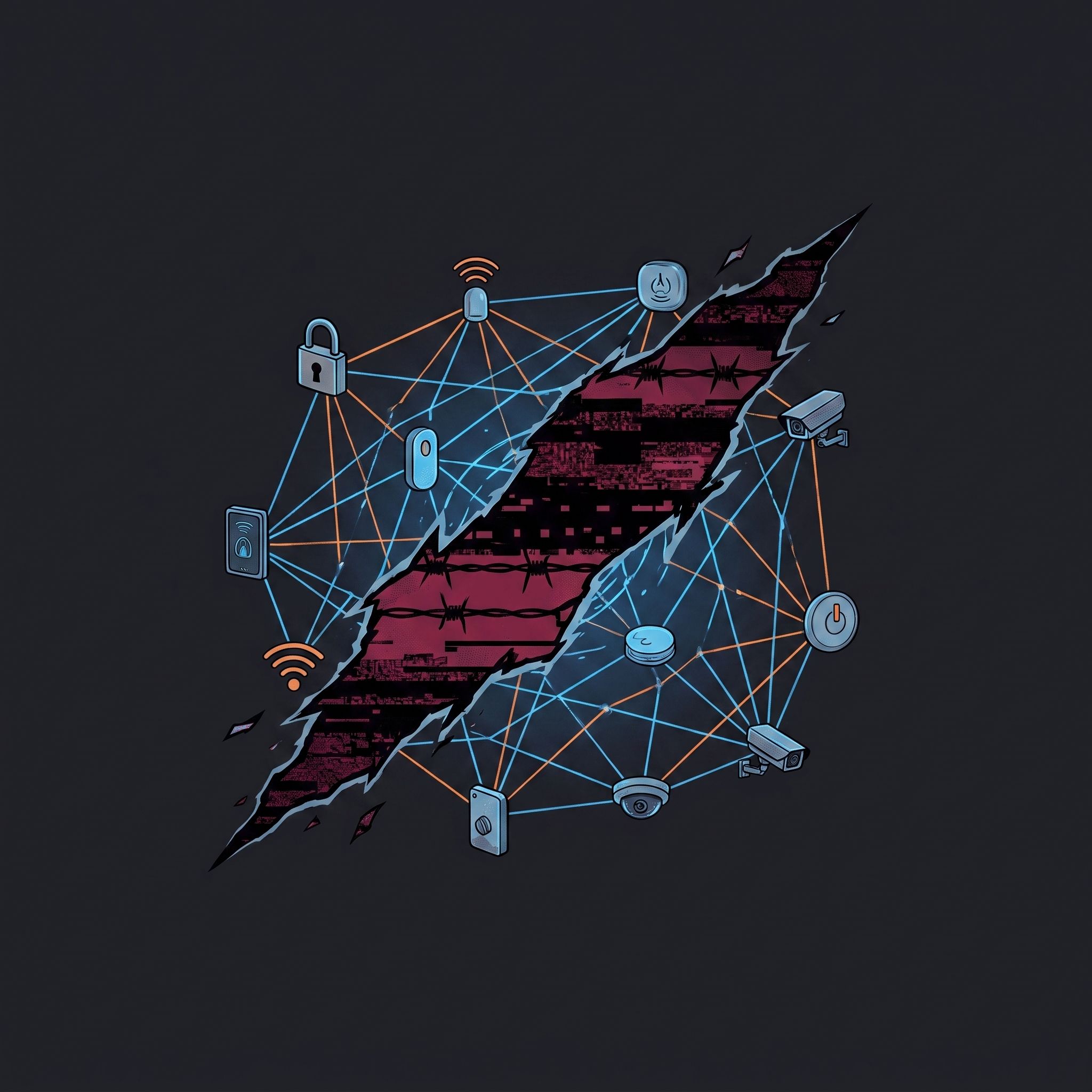
The concept of the Internet of Things relies entirely on the free exchange of data between devices. However, global internet freedom has been steadily declining for 15 consecutive years. Out of 72 evaluated nations, conditions deteriorated in 28, while only 17 showed improvement, with China maintaining the most restrictive environment for over a decade. Website blocking and content filtering directly damage the digital infrastructure required for connected systems to function.
Consequences of Network Access Disruption
The operation of smart cities and medical equipment requires uninterrupted traffic. When government authorities throttle bandwidth or shut down connections completely, smart infrastructure stops working. For instance, repeated mobile internet shutdowns in large regions of Russia caused disruptions in payment systems and commercial operations dependent on the Internet of Things.
Risks of Total Control and Surveillance
In states with tight control, digital censorship infrastructure is often repurposed for surveillance. IoT devices collect vast amounts of sensitive information, including location data, health metrics, and behavioral patterns. In environments with weak data protection laws, authorities can exploit this information using traffic cameras or smart utility meters.
Reduction of Cybersecurity Levels
Attempts to bypass restrictions often force users to implement additional routing tools, which introduces new vulnerabilities. Government traffic filtering methods, such as deep packet inspection (DPI) and DNS poisoning, facilitate man-in-the-middle (MITM) attacks, weakening the fundamental security of connected equipment.
Application of VPN and Existing Limitations
Virtual Private Network technologies allow encrypting traffic and rerouting it to regions without restrictions, providing devices with access to cloud services. However, this method has limitations, as some governments actively block circumvention tools themselves. Furthermore, traffic encryption does not solve issues related to age verification or application-level restrictions.
Practical Recommendations for Developers
IoT professionals must design systems to tolerate connection loss by implementing edge computing for local data processing. It is crucial to use end-to-end encryption for all traffic and thoroughly study national internet regulations in target regions before deploying hardware.
Rising Challenges for the Connected Future
Internet censorship is no longer just a political issue but an engineering challenge. As the boundary between the physical and digital worlds dissolves, developers of smart systems must address network restrictions as a key risk factor during the design phase.
Using a reliable service like HiroVPN can help minimize such risks, ensuring stable access to necessary resources and protecting your devices from network restrictions.